
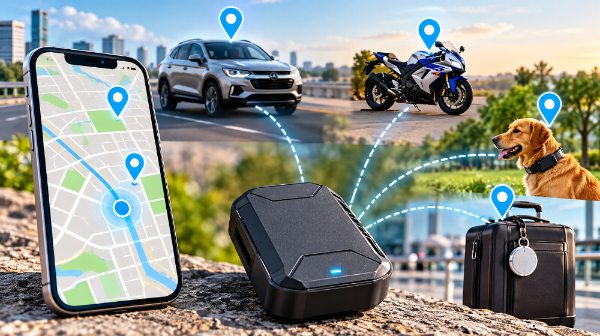
The term tracqueur can be confusing because it appears in several online contexts, including discussions about GPS trackers, location technology, digital monitoring, and the French word traqueur. Reliable French terminology sources distinguish between the established French terms used for tracking devices and the word traqueur, while “tracqueur” also appears online as a spelling variant. The term therefore should not automatically be treated as the name of one specific device, company, or technology. Understanding the context is essential before deciding what a reference to tracqueur actually means.
What Does Tracqueur Mean?
“Tracqueur” is best understood as an online spelling associated with the broader concept of tracking rather than as a universally standardized technical category. In French, traqueur is an established word, while official terminology for a tracking device includes terms such as traceur, dispositif de localisation, and dispositif de suivi. The Office québécois de la langue française specifically identifies traqueur as a discouraged term when referring to a tracking device, explaining that it can be confused with the English word “tracker.”
In everyday technology discussions, however, people may use the spelling tracqueur when talking about tools that locate or monitor objects, vehicles, devices, or other assets.
Why the Spelling Matters
The difference between traqueur, traceur, and “tracker” is more than a spelling detail. It can affect what information a reader finds and what type of technology is actually being discussed.
For example, a French-language reference may use traceur for a technical tracking device, while traqueur can refer to a person who tracks or pursues something. The exact meaning should therefore be established from the surrounding context rather than assumed from the spelling alone.
How Modern Tracking Technology Works
Tracking systems can use several technologies, and GPS is only one of them. A location device may receive signals from satellite navigation systems to calculate its position, while another system may rely on Bluetooth, Wi-Fi, radio signals, cellular networks, or nearby connected devices.
The Office québécois de la langue française identifies GPS, radio-frequency identification, and low-energy Bluetooth among technologies that can support location devices.
It is also important to separate finding a location from communicating that location. A device may determine where it is using satellite signals but need another communication method to send that information to a smartphone or online service. Consequently, not every tracker works in the same way or provides identical functionality.
Common Types of Tracking Devices
There is no single device category that can accurately be called a tracqueur. Modern tracking technology includes several different types designed for specific purposes.
GPS-based devices are commonly associated with vehicles, outdoor equipment, logistics, and other assets where geographic location is important. Bluetooth trackers are generally designed for nearby objects such as personal belongings. Some systems combine positioning technologies with mobile connectivity to provide remote location updates.
Digital tracking is another category. A “tracker” can refer to information-collection technologies used online, including cookies and tracking pixels. The Office québécois de la langue française describes traceur in computing as an information element used to gather information about a user’s activity.
Choosing the Right Technology
The appropriate tracking technology depends on what needs to be located, how far away it may be, and how frequently its position needs to be communicated.
Someone looking for lost personal belongings has different requirements from a business monitoring vehicles across large distances. Battery life, connectivity, positioning accuracy, physical size, subscription requirements, and privacy controls can all matter.
The name of a tracker alone does not reveal these specifications. Users should examine the actual technical documentation before purchasing or relying on any tracking product.
GPS Tracking and Connectivity
GPS and connectivity are related but different parts of many tracking systems. Satellite positioning can help a device determine its geographic location, but that information must be delivered somehow if another person is expected to view it remotely.
Depending on the device, communication may occur through cellular networks, Bluetooth, Wi-Fi, or other methods. A Bluetooth item tag, for example, is fundamentally different from a cellular vehicle-tracking unit.
This distinction is important when evaluating claims about a tracqueur or any other tracking device. A product that can calculate its position is not necessarily capable of continuously transmitting that position to a remote application.
Users should therefore check both positioning technology and communication method rather than focusing on GPS alone.
Privacy and Responsible Tracking
Tracking technology can be useful, but location and activity information can also be sensitive. A responsible approach requires understanding who can access the collected information, why it is collected, how long it is retained, and whether users have meaningful control over it.
Digital trackers can collect information about browsing behavior, while physical tracking devices may record location information. The Office québécois de la langue française notes that online tracking elements such as cookies and pixels can be used to gather information about users’ browsing habits.
Tracking another person without appropriate authorization can also create serious privacy and legal concerns. The exact rules depend on the country, circumstances, and type of tracking involved. Before using tracking technology involving another person, users should understand the applicable laws and obtain appropriate consent where required.
What to Check Before Using a Tracker
Before selecting a tracking product, start with the actual purpose. Decide whether the goal is finding belongings, monitoring a vehicle, managing assets, or understanding digital activity.
Next, examine the technology behind the product. Check how it determines location, how information is transmitted, battery expectations, operating requirements, and whether additional fees or connectivity services are necessary.
Privacy should be evaluated at the same time. Read the provider’s documentation to understand what information is collected and who can access it.
Finally, avoid assuming that a product is suitable simply because it is described online as a “tracker” or tracqueur. Different technologies solve different problems, and accurate specifications are more useful than a generic label.
Understanding the Term in Online Searches
Online references to tracqueur can lead to different subjects because the spelling is used inconsistently. Some pages discuss tracking technology, while others use the term in relation to the French word traqueur. There are also websites using “Tracqueur” as part of their own naming.
This makes context particularly important. A reader interested in a physical location device should look for specifications such as positioning technology and connectivity. Someone researching French vocabulary should instead consult authoritative language references.
The safest interpretation is therefore not to assume that every mention of tracqueur describes one particular product. Checking the source, terminology, and technical context can prevent misunderstandings.
Conclusion
Tracqueur is a broad and sometimes ambiguous online term connected with the idea of tracking. It can appear alongside discussions of GPS devices, Bluetooth technology, location systems, and digital tracking, while the established French vocabulary distinguishes terms such as traqueur and traceur according to context. Rather than treating tracqueur as the name of one universal technology, readers should identify the specific tracking system being discussed, understand how it works, and consider privacy, connectivity, and data access before using it.
FAQs
1. What is tracqueur?
Tracqueur is an online spelling associated with tracking. Depending on context, it may relate to GPS devices, location technology, digital tracking, or the French term traqueur.
2. Is tracqueur the same as a GPS tracker?
Not necessarily. Tracking can use GPS, Bluetooth, Wi-Fi, cellular networks, or other technologies. “Tracqueur” does not by itself identify the technology used.
3. What is the correct French term for a tracking device?
French terminology commonly uses traceur, dispositif de localisation, or dispositif de suivi for tracking devices. The Office québécois de la langue française distinguishes these from traqueur.
4. Does every tracker need cellular connectivity?
No. Different tracking systems use different communication methods. Some rely on Bluetooth or nearby devices, while others use cellular networks or other technologies for remote communication.
5. Are tracking technologies a privacy concern?
They can be. Location and online activity may be sensitive information, so users should understand what data is collected, who can access it, how it is stored, and whether appropriate consent is required.