The word plangud may look unfamiliar to English speakers, but its meaning becomes much clearer when viewed in its Estonian context. It is connected with the word plank, referring to a relatively thick wooden board. The Estonian Language Institute’s dictionaries document plank as a timber-related word and describe it as a board roughly 5–10 centimetres thick. The same dictionary also records another meaning connected with a solid wooden fence.
What Does Plangud Mean?
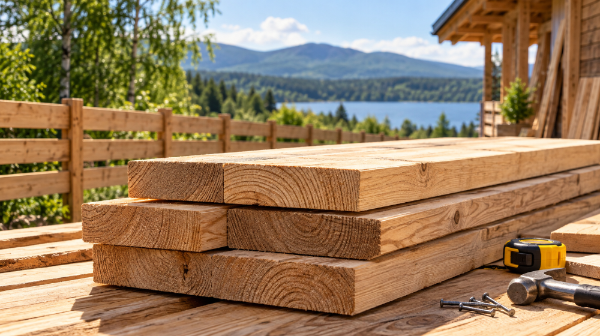
In its established Estonian use, plangud refers to planks or substantial wooden boards. The underlying singular word is plank. The Estonian explanatory dictionary describes this as a narrower board approximately 5–10 centimetres thick, with examples involving sawmills, floors, fences, benches, buildings, and boats.
This makes the term primarily a piece of timber vocabulary rather than the name of a particular product or technology. When encountered in an Estonian construction, woodworking, or timber context, the surrounding words are important because they can explain the wood species, dimensions, treatment, or intended purpose.
The word can therefore be understood most simply as wooden planks, although the precise characteristics of a particular plank depend on the material and application.
The Linguistic Background of the Word
The history of the word is also well documented. The Estonian Institute of Language’s etymological dictionary traces plank to Low German planke, meaning a thick board or a fence made from boards, with a further connection to German Planke.
This history is useful because it shows that the word is not a recently invented internet expression. It belongs to established Estonian vocabulary and has a documented relationship with timber and fencing.
For learners of Estonian, recognizing the connection between plank and plangud can make references to wooden construction easier to understand. For international readers, meanwhile, translating the term according to its surrounding context is generally more useful than treating it as the name of a special material.
How Wooden Planks Are Used
Wooden planks have many practical applications, and the Estonian dictionary itself provides several examples. Planks may be used in flooring, benches, fences, buildings, and boat construction.
The suitability of a particular plank depends on factors such as wood species, dimensions, moisture condition, surface preparation, and the requirements of the project. A plank selected for interior furniture does not necessarily have the same characteristics as timber intended for an outdoor fence.
Woodworkers may cut, plane, sand, join, or finish boards according to their project. Builders may instead prioritize structural properties, durability, dimensions, and applicable construction requirements.
Consequently, knowing the word alone is not enough to determine whether a particular piece of timber is appropriate for a job.
Planks in Fences and Outdoor Structures
Another documented meaning of plank in Estonian relates to a solid wooden fence or enclosure. The Estonian explanatory dictionary describes a fence made from boards and gives examples involving property boundaries and yards.
This explains why the same vocabulary can appear in both timber descriptions and discussions of fencing. Individual boards can be the physical building material, while the completed structure may also be described using related terminology.
For outdoor projects, factors such as exposure to rain, sunlight, ground contact, insects, and temperature changes can affect timber performance. Proper material selection and appropriate treatment are therefore more important than simply choosing a board because it looks strong.
The exact construction method should always follow the requirements of the project and the characteristics of the wood being used.
Timber Quality Depends on More Than Thickness
Although the Estonian dictionary gives an approximate thickness for the timber meaning of plank, that figure should not be treated as a universal commercial specification for every market.
Timber products can differ considerably according to species, grading, moisture content, machining, and intended application. Two boards with similar dimensions can perform differently if one has significant defects, different moisture conditions, or a different grade.
Buyers should therefore examine the actual specifications supplied by a timber merchant rather than relying on the word alone. Important details may include length, width, thickness, species, surface finish, grade, moisture condition, and whether dimensions are measured before or after processing.
This approach provides a much clearer understanding of what a particular timber product can realistically be used for.
Plangud in Traditional Construction
Wooden planks have historically played an important role in practical construction, and the Estonian dictionary provides examples connected with floors, buildings, fences, and boats.
In traditional woodworking, the characteristics of timber influence how it is cut and assembled. Grain direction, dimensions, strength, moisture, and surface condition can all affect the final result.
Boatbuilding is one particularly interesting example because planks can form part of a vessel’s outer structure. Flooring and fencing represent very different applications, yet both demonstrate how substantial wooden boards can be adapted to specific construction needs.
Modern projects may use engineered materials, treated timber, or manufactured boards alongside traditional solid wood. Even so, understanding established timber vocabulary remains useful when reading historical, linguistic, or contemporary Estonian material.
Why Context Matters When Reading Plangud
A foreign word can become confusing when it is removed from its original language. Plangud is a good example because English-language websites currently use the term in several unrelated ways, including descriptions that associate it with planning or digital productivity. Those newer online descriptions are not supported by the established Estonian dictionary evidence for the word’s timber meaning.
For that reason, readers should look at the source and context before accepting an unusual definition.
If the word appears beside terms relating to timber, sawmills, fences, floors, or boats, the established Estonian meaning provides a strong explanation. If a website gives the word an entirely different meaning, readers should look for independent documentation rather than assuming that the newer usage is an established definition.
Understanding the Term Without Overcomplicating It
The simplest way to understand plangud is to start with the documented Estonian word plank. In its timber sense, it describes a relatively thick wooden board, while related usage can describe a board-built fence.
That straightforward meaning is more useful than assigning the word an unsupported modern identity. It also demonstrates why language research should begin with authoritative dictionaries when an unfamiliar term appears online.
For someone buying timber, the next step is to examine the actual product information. For someone learning Estonian, understanding the relationship between the singular and plural forms provides useful vocabulary. For a reader researching historical construction, the dictionary examples offer clues about how wooden planks have been used in practical settings.
Conclusion
Plangud is best understood through its established Estonian meaning and its connection to plank. The Estonian Language Institute documents plank as a relatively thick wooden board and also records its use in describing solid wooden fences. Rather than assuming that every online reference uses the term in the same way, readers should consider the language, surrounding vocabulary, and source. In timber-related contexts, the documented meaning provides a clear starting point for understanding wooden boards used in construction, flooring, fencing, woodworking, and other practical applications.
FAQs
What does plangud mean?
Plangud is an Estonian form associated with plank, meaning wooden planks or substantial boards. The established vocabulary also connects plank with solid board-built fencing.
Is plangud an Estonian word?
Yes. The Estonian Language Institute’s dictionaries document plank as an established Estonian word for a relatively thick wooden board, with plangud appearing in related plural usage.
How thick is an Estonian plank?
The Estonian explanatory dictionary describes plank as approximately 5–10 centimetres thick. This is a dictionary description, not a universal specification for every commercial timber product.
Where can wooden planks be used?
Documented examples include floors, benches, fences, buildings, and boats. Actual suitability depends on the timber’s species, dimensions, condition, processing, and intended application.
What is the origin of the word plank?
The Estonian etymological dictionary traces plank to Low German planke, meaning a thick board or board-built fence, with a related German source.