
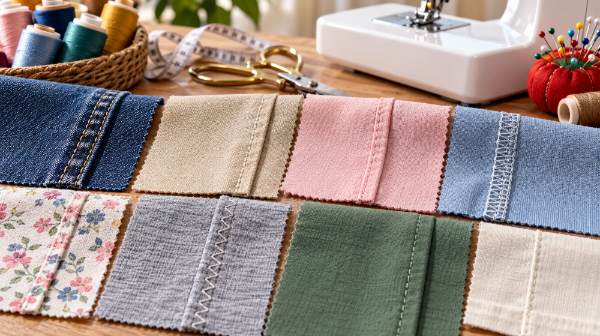
A seam is one of the fundamental elements of sewing and textile construction. It joins two or more pieces of material and can influence strength, flexibility, appearance, comfort, and the way a finished garment behaves. The German term nahttypen generally refers to different types or constructions of seams. These can range from a basic seam used for everyday garments to specialized constructions designed for durability, clean edges, stretch, or decorative effects. Understanding the basic differences makes it easier to choose an appropriate construction for a particular fabric and project.
What Does Nahttypen Mean?
In German textile terminology, “Naht” means seam, while “Typen” means types. Therefore, nahttypen can be understood as “seam types.” A seam is created when textile layers are joined, commonly with thread and stitches. Sewing can be performed by hand or machine, and different constructions are selected according to the material, intended use, desired appearance, and required durability.
It is useful to distinguish a seam from a stitch. A stitch describes how thread is formed or interlaced, whereas a seam describes the construction used to join material. For example, a straight stitch may be used in a simple seam, while other stitch formations can be used when elasticity or edge finishing is required.
Why Different Seam Types Matter
Not every fabric behaves in the same way. A lightweight woven fabric may require a different construction from denim, while knitted or elastic materials need a connection that can accommodate movement. Seam choice can also affect how much bulk appears inside a garment and whether raw fabric edges remain exposed.
A seam therefore has both a structural and visual role. A basic construction may be sufficient where simplicity is important, whereas a reinforced or enclosed construction can be appropriate where durability or a neat interior is needed. The width of the seam allowance, stitch formation, thread, fabric characteristics, and finishing method can all influence the final result.
Open and Closed Construction
One common distinction concerns what happens to the seam allowances. In an open seam, the allowances are generally pressed apart after joining. In a closed construction, they may be pressed together and finished as one. The appropriate approach depends on the fabric and the garment design.
Common Types of Seams
There are numerous nahttypen, and terminology can vary between sewing traditions and professional contexts. Some constructions are especially common in clothing and textile work.
A simple seam is one of the most straightforward methods: fabric pieces are placed together and stitched along the intended seam line. A French seam encloses the raw edges within the construction, giving the inside a clean appearance. A flat-felled or lapped seam folds and secures fabric allowances, creating a durable construction commonly associated with garments such as jeans and some shirts. Overlock seams can simultaneously join and finish fabric edges, depending on the machine and setup.
French Seams for Clean Inside Finishes
A French seam is particularly useful when exposed raw edges would be undesirable. It is made in two stages so that the cut edges become enclosed within the finished seam. This produces a neat interior without requiring the raw edges to remain visible.
This construction is commonly associated with lightweight or delicate fabrics and is also used for some transparent garments. Because the seam contains additional folds of fabric, it can create more bulk than a simple open seam, so fabric weight and garment design should be considered before choosing it. BurdaStyle describes the French seam as a combined seam and edge-finishing method and highlights its use with transparent materials.
Flat-Felled and Lapped Seams
A flat-felled seam is designed to enclose fabric edges and secure the folded allowance to the garment. It produces a relatively flat and durable construction, with visible stitching often forming part of the appearance.
This type of construction is strongly associated with durable garments, including denim clothing. Because the raw edges are enclosed, the inside has a clean finish while the additional stitching contributes to the seam’s characteristic appearance. It can require more fabric manipulation than a basic seam, so it is generally selected when its strength and finish justify the additional work.
Overlock Seams and Stretch Materials
Overlock construction is particularly useful for handling fabric edges. Depending on the machine configuration, an overlock machine can trim, join, and finish an edge in a single operation. This makes it widely useful in garment production and home sewing.
Elastic and knitted materials require particular attention because the finished connection needs to accommodate the movement of the fabric. A suitable stitch or seam construction can help prevent the thread from breaking when the material stretches. However, the exact setup depends on the fabric, machine, thread, needle, and intended use.
Seam and Stitch Are Not the Same
A common source of confusion is treating a seam type and stitch type as identical. They are related but describe different aspects of sewing. A seam concerns how material pieces are joined and constructed, while a stitch type concerns the formation and interlacing of thread. Dürkopp Adler, for example, classifies stitch types according to their thread-interlacing characteristics.
Choosing the Right Seam for a Project
Choosing among different nahttypen should begin with the material and the purpose of the finished item. Consider whether the fabric is woven, knitted, lightweight, heavy, delicate, or prone to fraying. Next, consider where the seam will be located and how much stress it will experience.
Appearance also matters. Some projects benefit from a nearly invisible or enclosed finish, while others deliberately use visible parallel stitching as part of the design. The available sewing machine and the desired production method can further affect the practical choice. There is no single seam construction that is appropriate for every material or garment.
Seam Allowance and Finishing
Seam construction cannot be considered separately from seam allowance. The allowance is the area of fabric between the stitching line and the cut edge. Its width provides material needed for construction and can affect how easily a seam can be pressed, folded, enclosed, or finished.
Raw edges may need additional treatment when a construction does not already enclose them. Depending on the material, this can involve overcasting, overlocking, binding, or another finishing method. Proper pressing is also important because it helps establish the intended shape and reduces unnecessary bulk.
Common Mistakes When Working With Seams
Beginners sometimes focus only on whether two fabric pieces are connected and overlook how the completed seam will behave. A seam can technically hold two pieces together while still being unsuitable for the fabric or the intended use.
Using an unsuitable stitch on an elastic material, failing to account for fraying, choosing excessive seam bulk, or ignoring the required seam allowance can all affect the result. Stitch length and thread tension also deserve attention. Current sewing guidance emphasizes that stitch selection influences strength, elasticity, appearance, and edge finishing.
Nahttypen in Textile Construction
The range of nahttypen extends beyond the most familiar household sewing techniques. Textile seams can be constructed using different arrangements of overlapping or adjoining material. Some connections rely on stitching, while textile technology also recognizes other methods of joining materials, including welding and adhesive bonding.
In general textile construction, overlapping seams and butt-type constructions represent broad structural approaches. Overlapping arrangements can provide additional material at the connection, while butt-type constructions can produce relatively flat results. The choice depends on the material, equipment, performance requirements, and desired finish.
Conclusion
Understanding nahttypen provides a useful foundation for anyone interested in sewing, garment construction, or textile manufacturing. Different seams are designed for different combinations of strength, flexibility, appearance, edge control, and material behavior. Simple seams may work well for straightforward projects, while French seams, flat-felled constructions, and overlock methods offer particular benefits in suitable situations. The most reliable approach is to consider the fabric, stress level, desired appearance, seam allowance, and available equipment before choosing a construction. With these factors in mind, seam selection becomes a practical design decision rather than a matter of using one method for every project.
FAQs
1. What does nahttypen mean?
Nahttypen is a German term that generally means “seam types.” It refers to the different constructions used to join pieces or layers of textile material.
2. What is the difference between a seam and a stitch?
A stitch describes how thread is formed and interlaced, while a seam describes the construction used to join material. Different stitches can therefore be used within seam constructions.
3. When is a French seam useful?
A French seam is useful when a clean interior is desired because it encloses the raw fabric edges. It is particularly associated with lightweight and transparent fabrics.
4. What is a flat-felled seam used for?
Flat-felled seams are useful when a durable, enclosed-edge construction is wanted. They are commonly associated with garments such as jeans and some shirts.
5. Are overlock seams suitable for stretchy fabrics?
Overlock construction can be useful for knitted and elastic fabrics because appropriate overlock stitching can join and finish edges while accommodating fabric movement. The exact setup depends on the material and machine.